
Is Lifting Weights Good for Your Heart? What I Tell Members
Yes. Big studies link regular strength training to fewer heart attacks and lower heart-disease risk, especially paired with cardio. Here's how much it takes.
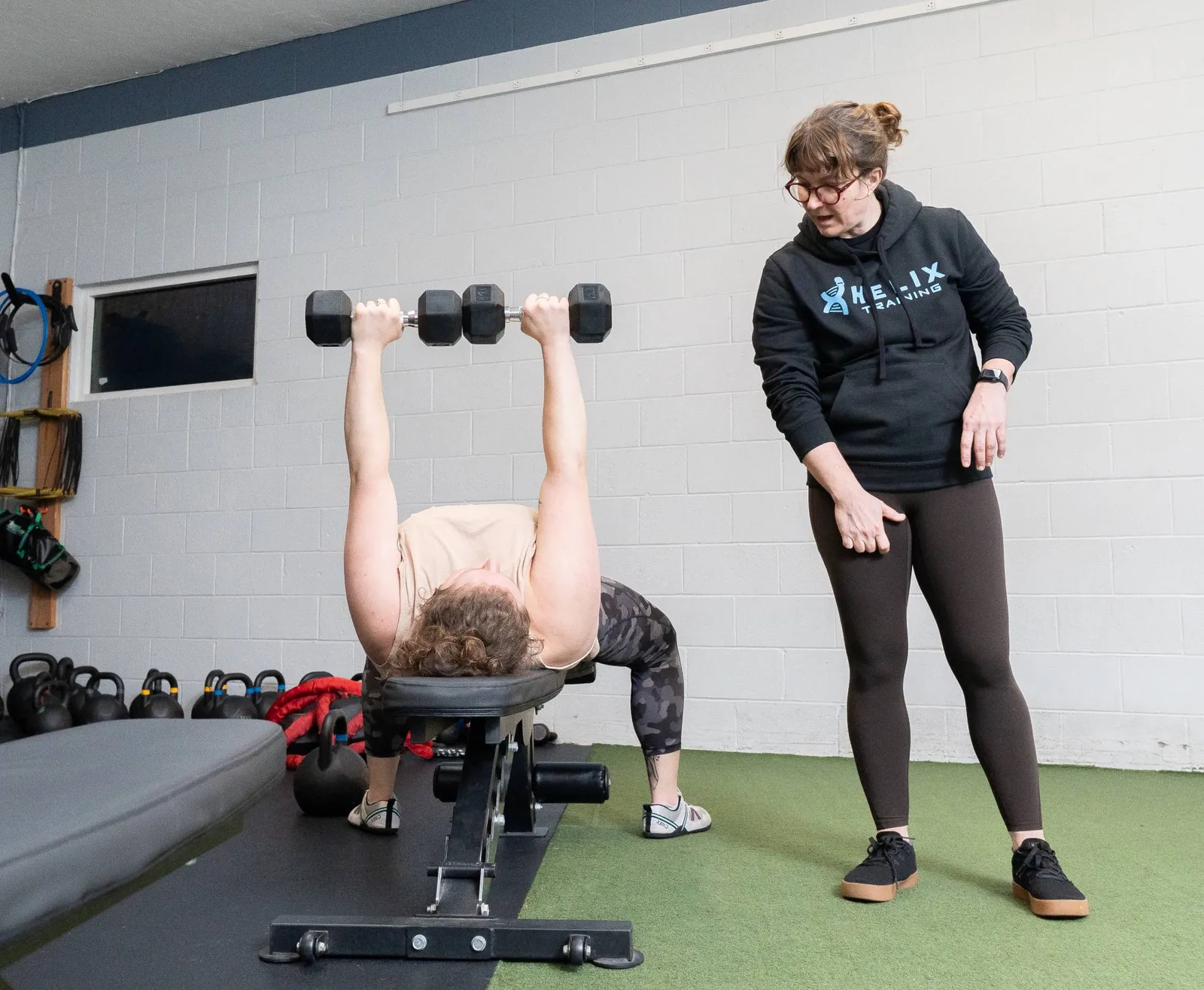
Yes. Lifting weights is good for your heart, and the evidence keeps getting stronger. When people walk into our gym in Corvallis, they usually think of cardio as the “heart” workout and lifting as the “muscle” workout. The research says your heart wants both.
What does the research actually say?
Here are the studies I’d point a friend to, with the real numbers.
Strength training and heart attacks in women. A 2026 study in the Journal of the American College of Cardiology followed 117,025 women for about 14.5 years. Women who did two or more hours of strength training a week had a 20% lower risk of major heart disease events than women who did none. For heart attacks specifically, the risk was 44% lower. Every extra hour a week was linked to about 5% lower risk. One honest note: the study didn’t find a lower risk of stroke.
Lifting plus cardio beats either one alone. A 2023 study in JAMA Internal Medicine tracked 500,705 U.S. adults for about 10 years. The lowest risk of dying from heart disease showed up in people who did 150 to 225 minutes of moderate cardio a week, up to 75 minutes of harder cardio, and two or more strength sessions. Their risk was about 70% lower than people who did no cardio and less than the recommended strength training.
Your grip says something about your heart. The PURE study, published in The Lancet in 2015, measured grip strength in 139,691 adults across 17 countries. Every 5 kg (about 11 pounds) drop in grip strength was linked to a 17% higher risk of dying from heart disease. Grip strength predicted that risk better than systolic blood pressure did. I love this one, because a grip test takes about ten seconds.
Now the part a good evidence nerd has to say out loud: these are observational studies. They show that strong people tend to have healthier hearts. They can’t prove the lifting caused it. The PURE authors said so themselves; they called for more research to test whether getting stronger lowers the risk. That’s honest science, and I’d rather tell you that than oversell it.
Why would lifting help your heart?
When I coach, I give people two reasons.
More muscle helps control blood sugar. Working muscles pull sugar out of your blood to use as fuel, and strength training makes them better at it. The more muscle you have, and the more you use it, the better your body can control blood sugar. That’s one of the ways lifting helps your heart. The American Heart Association’s 2023 scientific statement on resistance training lists “improved insulin sensitivity” as one of the ways lifting helps, and it found fasting blood sugar dropped by about 2 to 5 mg/dL in older adults who did strength training.
Stronger muscles mean less work for your heart. I tell members: when your legs and back are strong, carrying the groceries in one trip or flipping the trash can onto the curb takes a smaller share of your effort. Your heart doesn’t have to push as hard to get the job done. Blood pressure is part of this too. In the same AHA statement, strength training lowered blood pressure in adults over 40 by about 4 points on top (systolic) and 2 on the bottom (diastolic), and by about 6 and 5 points in people with high blood pressure.
The AHA authors sum it up in one line:
“RT benefits cardiovascular health through avenues such as lowering BP, improving cholesterol, and improving insulin sensitivity.” (American Heart Association, 2023)
RT is resistance training; BP is blood pressure. The statement also calls strength training “a safe and effective approach for improving cardiovascular health in adults with and without cardiovascular disease.” The National Academy of Sports Medicine says it simply: “Regular resistance training lowers resting blood pressure, which reduces strain on the heart and blood vessels.”
How much strength training do you need for heart health?
Less than most people think. The AHA statement notes that fewer than one in three U.S. adults do the recommended two days a week of strength training. So if you’re doing zero right now, two days a week is a real upgrade.
Here’s what I tell members:
- Two days a week is the goal. That’s what the guidelines recommend, and it’s where the JAMA study saw the biggest drop in heart-disease deaths.
- Keep your cardio. The women’s study found the lowest risk in women who did both cardio and strength training and kept TV time under two hours a day. Lifting adds to your walks, hikes, and bike rides. It doesn’t replace them.
- Train your whole body. Women who trained both upper and lower body saw a stronger link to lower risk than those who didn’t. A squat, a push, a pull, a hinge, a carry. That covers it.
- Stick with it. Women who kept strength training for most of the study period saw the biggest benefit. Consistency beats intensity here. Showing up twice a week for years matters more than one heroic month.
Is lifting safe if I have high blood pressure or a heart condition?
For most people, yes, with the right setup. The AHA statement covers people with and without heart disease. That said, I’m a physical therapist, and this is where I put on that hat: if you have a heart condition, high blood pressure that isn’t under control, or chest pain or unusual shortness of breath with exercise, talk to your doctor before you start. A good gym works with your care team. It doesn’t replace them.
In our classes, a few habits keep things comfortable:
- Breathe. Don’t hold your breath through a hard rep. Exhale as you push or stand up.
- Start lighter than you think. We’d rather you finish a set feeling like you had two more reps in you.
- Stop and tell your coach if you feel dizzy, chest pressure, or anything that’s not normal for you.
If you want more on getting started safely, I wrote about it in Is Strength Training Safe After 50?
Your heart is a muscle too. Give the rest of your muscles some work, and it gets the benefit. Book a free class and see how it feels.
References
- Zhang T, et al., 2026. Resistance training, aerobic activity, television viewing, and risk of major cardiovascular events in U.S. women. Journal of the American College of Cardiology. link
- López-Bueno R, et al., 2023. Prospective associations of different combinations of aerobic and muscle-strengthening activity with all-cause, cardiovascular, and cancer mortality. JAMA Internal Medicine. link
- Leong DP, et al., 2015. Prognostic value of grip strength: findings from the Prospective Urban Rural Epidemiology (PURE) study. The Lancet. link
- Paluch AE, et al., 2023 (American Heart Association). Resistance exercise training in individuals with and without cardiovascular disease: 2023 update. A scientific statement from the American Heart Association. Circulation. link
- Hamilton H, 2026. Strength training for women: debunking myths and building real strength. National Academy of Sports Medicine. link