
Is Strength Training Safe After 50? What I Tell New Members
Yes — for most healthy adults it's one of the best things you can do for bone, balance, and independence. Here's how we start people over 50 in Corvallis.
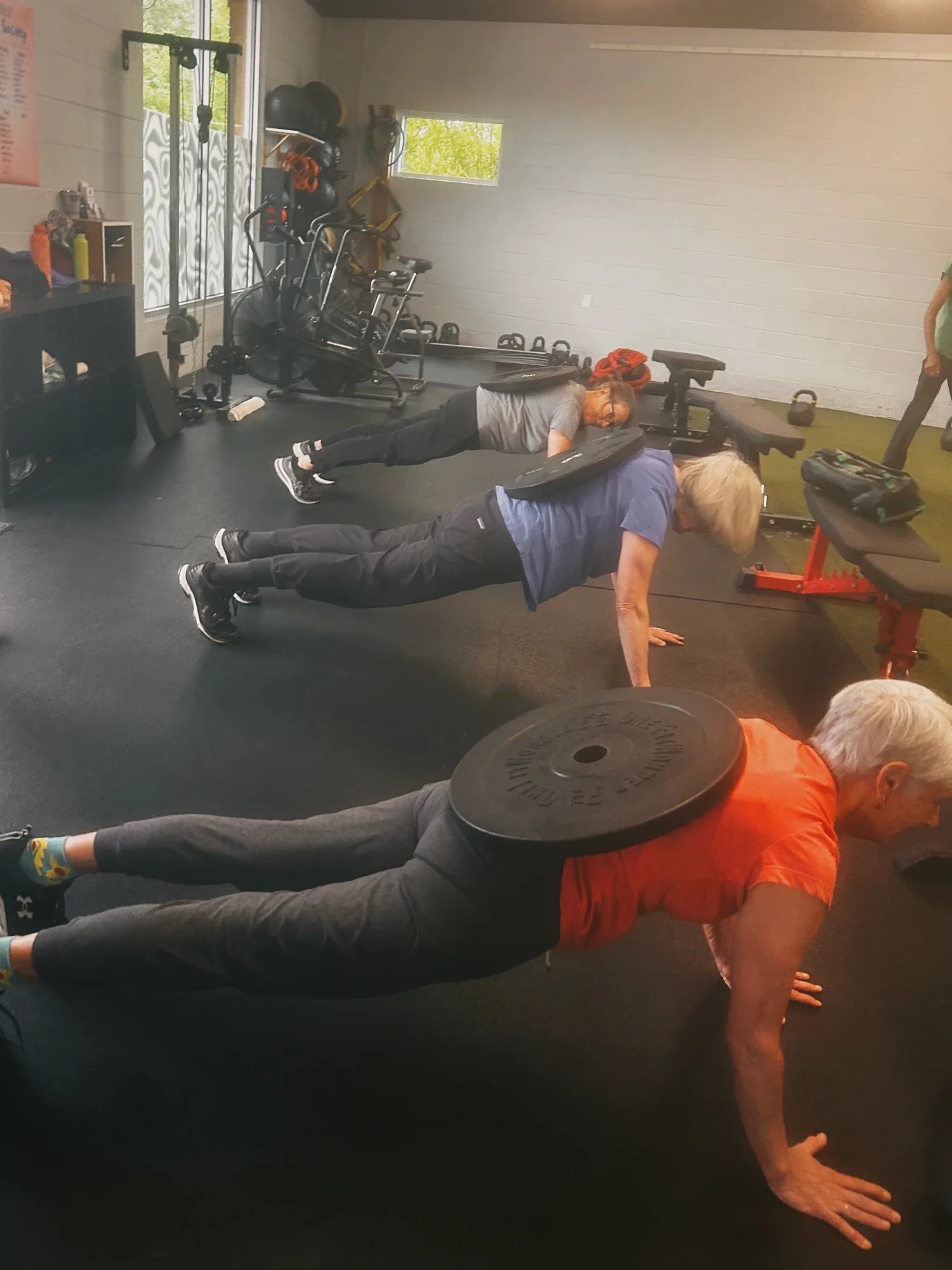
Short answer: yes. For most healthy adults over 50, strength training is safe, and it is one of the highest-return things you can do for the next thirty years of your life. When I see someone walk into our gym in Corvallis for the first time at 58 or 67, the question underneath “is this safe?” is usually “is it too late?” It isn’t. Muscle responds to training at every age we have studied.
Why does strength matter more after 50, not less?
Because this is the decade when the body starts quietly withdrawing it. The American College of Sports Medicine’s position stand on older adults (2009) reviews how the body changes with normal aging and concludes that regular exercise can minimize the effects of an otherwise sedentary lifestyle and add years of active life. What people notice first isn’t a smaller arm. It’s a harder time getting up off the floor, carrying two grocery bags up the stairs, or dragging the trash can to the curb.
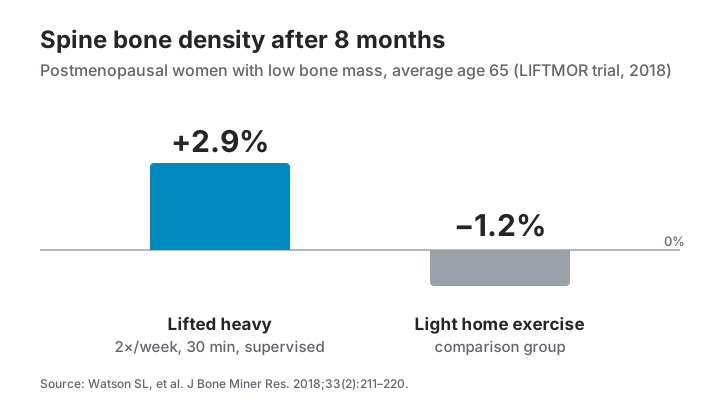
The good news is that muscle and bone both answer to the same signal: load. The LIFTMOR trial (Watson et al., 2018) took 101 postmenopausal women, average age 65, all with low bone mass, and had half of them lift heavy twice a week for 30 minutes under supervision for eight months. Spine bone density rose 2.9% in the lifting group and fell 1.2% in the control group, every measure of physical function improved, and the researchers reported only one minor adverse event — a back spasm — in a population that, in their words, isn’t usually prescribed heavy lifting because of “a perceived high risk of fracture.”
Is it actually safe?
The injury rate for supervised strength training is low. Even in competitive weight-training sports, where the loads are far beyond anything we use with a new member, a 2017 systematic review (Keogh and Winwood, 2017) found rates from under 1 up to about 7.5 injuries per 1,000 hours of training, which the authors describe as low compared with common team sports. In our gym the numbers that matter are simpler: classes are capped at 12, a coach watches every rep, your first class starts with a movement check and a conversation about your history, and we scale the load to the person in front of us.
Three things make it safe in practice:
- Start lighter than feels necessary. The first two weeks are about learning positions, not chasing weight.
- Progress in small steps. Adding 2–5 pounds a week compounds fast. Jumping 20 pounds because it “felt easy” is how people get hurt.
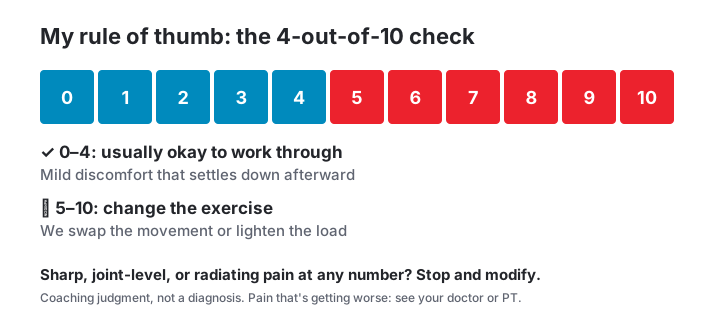
- Respect pain that changes the movement. Muscles working hard feel like effort. Sharp, joint-level, or radiating pain means we stop and modify. My rule of thumb with patients: mild discomfort, around a 4 out of 10 or less, that settles down afterward is usually okay to work through. Anything more, we change the exercise.
When I coach Strength+, our over-50 class, I tell people the same thing every week: the goal is to leave feeling better than you came in, not wrecked.
What about my knees, back, or shoulders?
Most people over 50 have something. That’s not a sign your body is falling apart. It’s a sign you’ve been using it. The question isn’t whether you have an achy knee; it’s whether we can find movements that load the muscles around it without provoking it. Usually we can. (The knee is my favorite joint, so I take this part personally.) A 2015 Cochrane review of 54 trials found that land-based exercise reduced pain and improved function in people with knee osteoarthritis. Pain dropped by about 12 points on a 100-point scale, a benefit the authors described as comparable to what is “reported for non-steroidal anti-inflammatory drugs” (Fransen et al., 2015).
That said, I’m a physical therapist, and here is where I put on that hat: if you have a recent injury, a diagnosed condition, or pain that is getting worse, see your doctor or a PT before you start. Coaching is not medical care, and a good gym knows the difference.
How often should someone over 50 lift?
Here’s my coaching answer, not a research finding: two or three sessions a week. The ACSM position stand recommends that exercise for older adults include aerobic, muscle-strengthening, and flexibility work, and closes with a line I’d put on the wall: “All older adults should engage in regular physical activity and avoid an inactive lifestyle.” How many strength days that means is a judgment call; in our gym, two a week is where most people land, and a third is a bonus.
Rest matters as much as work. A day between strength sessions is the norm, and a walk on the off days is plenty.
What does the first month look like at Helix?
- Week 1: A free first class. We do a short movement screen, talk through your history, and you take a scaled version of the workout.
- Weeks 2–4: Two classes a week. You learn the hinge, the squat, the press, the row, and the carry, the five patterns that cover most of daily life. If I could only give you one exercise, it would be the squat. Every time you stand up from a chair, you’re doing one.
- By the end of month one: You know the movements, you know the coaches, and you have a baseline to build on.
If you want a slower on-ramp, Strong Foundations is a six-week beginner course that covers the same patterns one at a time. If you want a room full of people your age, Strength+ is built for you.
The one thing I’d want you to take from this
Starting is safer than not starting. The risk of a supervised strength program is small and manageable. The risk of losing strength year over year is the thing that actually takes independence away. Whether your goal is hiking South Sister or just getting up off the floor without a second thought, strength is how you get there. Come try a free class, meet a coach, and see how it feels.
References
- Watson SL, et al., 2018. High-intensity resistance and impact training improves bone mineral density and physical function in postmenopausal women with osteopenia and osteoporosis: the LIFTMOR randomized controlled trial. link
- Fransen M, et al., 2015. Exercise for osteoarthritis of the knee. Cochrane Database of Systematic Reviews. link
- American College of Sports Medicine, 2009. Position stand: Exercise and physical activity for older adults. link
- Keogh JWL, Winwood PW, 2017. The epidemiology of injuries across the weight-training sports. Sports Medicine. link